When anyone mentions charity or donations, my brain tends to jump to two very different extremes.
On one end, there’s the image of dropping a bit of loose change into a Salvation Army brass band collection tin in the town square just before Christmas. I am from the North of England.
On the other end of the scale, there’s the big stuff — a wealthy benefactor funding an entire wing of a new hospital, their name etched into a plaque on the wall for generations to see.
Both are important. Both matter. But neither tells the full story of what charitable giving can look like.
Giving Is About More Than Cash
We tend to associate philanthropy almost exclusively with money. How much was donated. How large the cheque was. What the dollar value of the impact might be.
But real, meaningful giving isn’t always about cash. Sometimes it’s about time. Sometimes it’s about access. Sometimes it’s simply about noticing an opportunity and acting on it.
And occasionally, it’s about a bike.
An Unexpected Dirt Jump Project
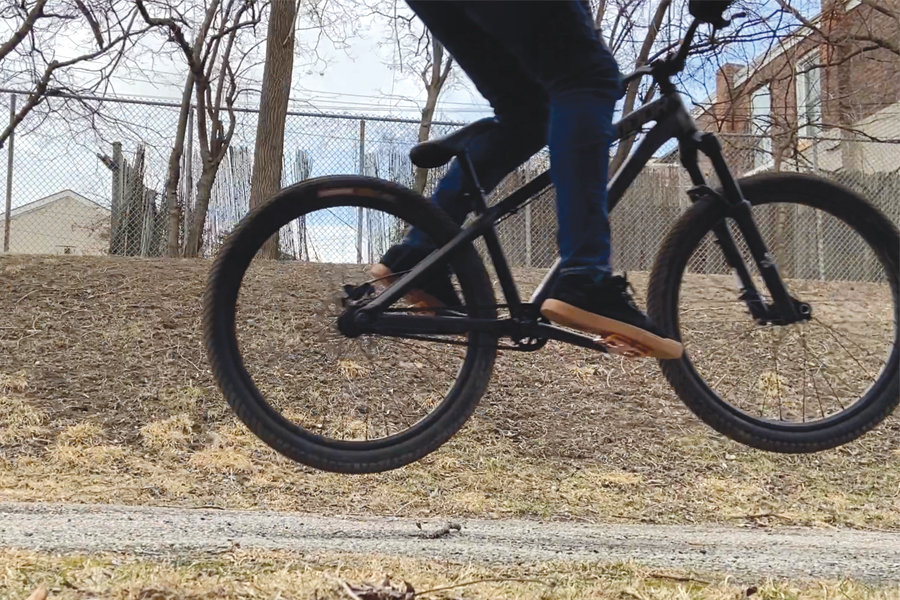
Recently, I came into possession of a dirt jump bike as a by-product of another project. It wasn’t new, and it definitely wasn’t flashy. A few years old, with some wear and tear.
But here’s the thing about dirt jump bikes: they don’t really change much. The geometry stays largely the same, they’re built tough, and they’re designed to take an absolute beating. If anything, a well-used dirt jump bike has more kudos than a shiny new one.
This one needed a bit of love. A few parts. Some fresh tyres. Nothing outrageous — just the basics to make it safe.
From One Coast to Another
The bike wasn’t staying local. Its destination was the Maritimes, through a coincidence.
A guy bought some wheels from me and knew of a kid who needed an upgrade from a broken, hand-me-down BMX. While chatting about bike setup and what I do on a video call, he noticed all the bikes in the background.
He knew a kid.
Anyone who’s shipped something bulky across the country knows that logistics can quickly become the biggest barrier. Even when the item itself is “free,” the cost of getting it from A to B can be enough to kill a good idea.
This is where SportsPay stepped in.
SportsPay covered the shipping and handled the logistics. They also added what really matters when you’re talking about a young rider: a helmet, knee pads, and a set of pedals. Not extras. Essentials.
No press release. No marketing campaign. Just making sure the bike arrived safely and could be ridden properly.
The Real Outcome
The end result?
There’s now a 15-year-old kid in the Maritimes who’s building dirt jumps and riding every day — a kid who simply would not have been able to afford a bike like this otherwise.
That bike isn’t sitting in a garage. It’s not being saved for “special occasions.” It’s being used — daily. It’s helping someone get outside, learn new skills, push their limits, become part of a riding community, and build a social media presence.
That’s the kind of impact you can’t always measure in dollars.
Small Actions, Real Impact
This wasn’t a massive donation. It didn’t fund a building or create a foundation. But it changed something very real for one person.
It reminded me that charitable acts don’t have to be grand or expensive to be meaningful. Sometimes they’re practical. Sometimes they’re personal. And sometimes they come from simply recognising that something you have — or can help move along — could make a huge difference in someone else’s life.
Philanthropy isn’t always about how much you give.
Sometimes it’s about knowing when to pass something on.
And occasionally, it’s about a dirt jump bike finding its next rider.
What’s next? More new bike giveaways to good causes in 2026.
Want to help? Drop us an email: jamie@sportspay.com